These scientists will be present on 3 June 2026

A large number of scientists from a wide range of research institutions in Braunschweig will be taking part in the Salon der Wissenschaft on June 3rd 2026. From biodiversity to digitalization, climate protection, health, and culture— many disciplines will be represented.

Each of these scientists will be offering one-on-one conversations at the Salon der Wissenschaft, whic can be booked on-site. You can also listen to some pre-selected conversations via headphones.

WHO IS TAKING PART THIS YEAR?

Tonia Andresen, Ph.D. candidate

What images did modern artists create of the “tropics”?
Postdoc researcher Art History Department/Braunschweig University of Art
“Bad Bunny's globally acclaimed Super Bowl performance employed a cultural symbolism that evoked an image of the “tropics” whose origins can be traced back to the 15th century. For a long time, the tropics were considered the ‘exotic’ other in the European imagination, in contrast to the 'civilized”' world. But how did artists in the Americas represent the region?”
SLOT follows
Further information

© Lydia Plinke

Christiane Baschien

PD Dr. Christiane Baschien

How does climate change affect mushroom populations?
Curator of Fungi at the Leibniz Institute, DSMZ—German Collection of Microorganisms and Cell Cultures
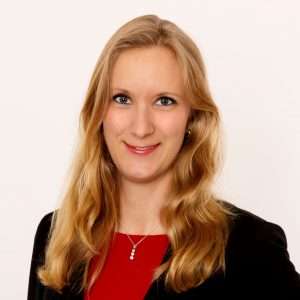
“Fungi are a fascinating group that form their own kingdom within the realm of living organisms. They possess unique characteristics that enable them to colonize even the most remote corners of the world. But how are fungi adapting to climate change? And what kinds of fungi can we expect to see in our region as the climate changes?”
SLOT follows
Further information

private

Dr. Julia Belda

Wood reinvented: How does it become an innovative material?
Project Manager at Fraunhofer Institute for Wood ResearchWilhelm-Klauditz-Institut WKI
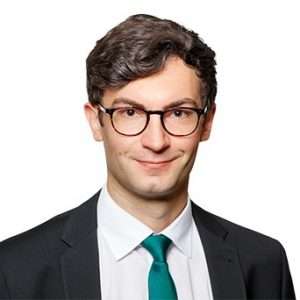
“My research focuses on developing innovative materials from wood, agricultural raw materials, and recycled materials. The emphasis is on bio-based adhesives, wood's natural binding properties, and modern processing technologies. This leads to the creation of sustainable products for applications such as construction and furniture. Recycling and resource conservation play a central role in this process.”
SLOT follows
Further information

© Fraunhofer WKI

Dr. Phillip Farr

Without smartphones or glasses? What would our world look like without optical coatings?
Group Manager Precision Optical Coatings at Fraunhofer Institute for Surface Engineering and Thin Films IST
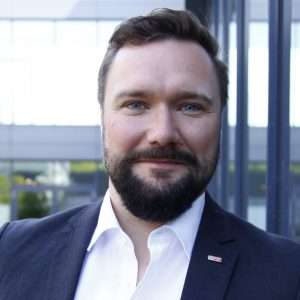
“They are everywhere yet invisible: ultra-thin optical coatings in smartphones, eyeglasses, and satellites. Without them, displays would be blinding, cameras would fail, and measuring instruments in satellites would not work. Dr. Philipp Farr takes you behind the scenes of these ‘hidden champions’ and shows how his team is shaping the future, layer by layer, with such high-precision coatings.”
SLOT follows
Further information

© Fraunhofer IST/Ulrike Balhorn

Katja Frenzel

What makes a battery moody?
PhD student at Physikalisch-Technische Bundesanstalt (PTB)
"Batteries may seem unassuming, but inside they are surprisingly alive. During charging and discharging, atoms shift, new structures form – and sometimes collapse again. These processes determine how long a battery lasts. Research on both established and new chemistries reveals the untapped potential in every cell – and how exciting the next discoveries will be."
SLOT follows
Further information

© PTB

Dr. Sarah Babin

Head of Exhibition and Event Management at the Herzog Anton Ulrich Museum
Text follows
SLOT follows
Further information

private

Dr. Yvonne Becker

What determines friend or foe, when plants interact with microorganisms?
Scientist at Institute for Epidemiology and Pathogen Diagnostics/ Julius Kuehn Institute (JKI)
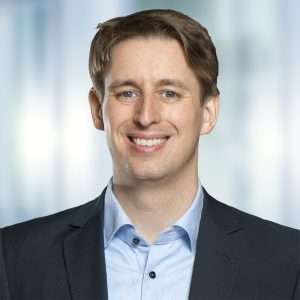
"Plants are colonized by a variety of microorganisms. Their interaction is harmless, sometimes even beneficial e.g. when microorganisms at the root help the plant to score nutrients and water. We investigate how environmental factors and genetic variations influence plant-microorganism i nteractions and what makes microorganisms change from harmless plant inhabitants into harmful plant pests."
SLOT follows
Further information

Sarah Barnert/JKI

Dr. Hans-Benjamin Böckler

Energy transition: Hydrogen for climate neutrality?
Head of Working Group „Gas Properties & Hydrogen at Physikalisch-Technische Bundesanstalt (PTB)
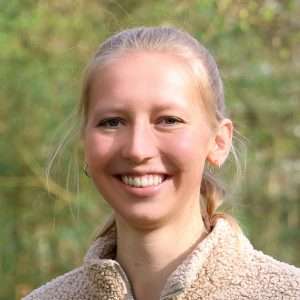
"It sounds so simple: break water down into its components using green electricity, store the hydrogen and feed it into the gas grids later - for CO2-free combustion. But not everything that sounds simple is easy to realise. Many technological questions still need to be answered and practical solutions found before hydrogen becomes part of our everyday lives."
SLOT follows
Further information

© PTB

Antonia Fels

How can climate-friendly agriculture succeed on peatlands?
Scientific researcher at Thünen Institute of Climate-Smart Agriculture
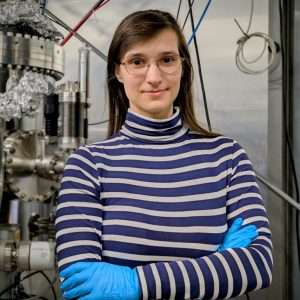
"Intact peatlands are efficient carbon sinks and thus true climate protectors. However, more than 90 percent of Germany's peatlands have been drained for agriculture and forestry and now release large amounts of greenhouse gases. Rewetting can only succeed in cooperation with local businesses. Can paludiculture offer an alternative that combines agriculture and climate protection?"
SLOT follows
Further information

© Thünen Institute/Nadine Zirbes

Prof. Dr. Julia Gebert

Can bacteria help us to operate landfills in a climate-friendly way?
Professor at the Leichtweiß Institute for Hydraulic Engineering, Department of Waste and Resources at TU Braunschweig
"To protect our environment and human health, waste that cannot be recycled is safely stored in landfills. This is where the climate-impacting gas methane is produced due to the exclusion of air. We are researching how natural biological processes can be used in a targeted manner to transform landfills from a methane source into a methane sink!"
SLOT follows
Further information

© Kristina Rottig, TU Braunschweig

Dr. Liubov Bakhchova

Upset without a clear reason? - check electrochemical balance
Group leader "Biomedical Systems" at the Institute for CMOS Design at TU Braunschweig
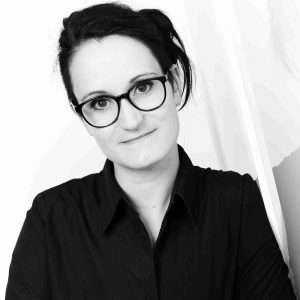
"Mood shifts rarely happen “for no reason.” Research in neuroscience and biochemistry shows that neurotransmitters, ion gradients, and membrane potentials shape how your brain processes thoughts and emotions. Even small electrochemical changes can affect how you feel. Discover the science behind your mood — clearly explained and surprisingly relevant to everyday life."
SLOT follows
Further information

Maryna Bosiaha

Janina Becker

Warum spielen wir mit Führungskräften der Polizei ein digitales historisches Spiel, in dem es um Widerstand gegen den Nationalsozialismus geht?
Research associate at the Leibniz-Institut für Bildungsmedien | Georg Eckert Institute
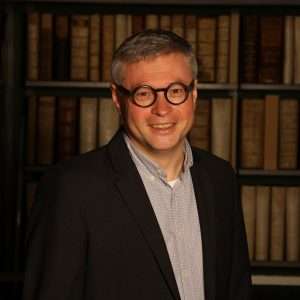
"Janina Becker explains her concept for a democracy education workshop for the police, centered around the digital game "Through the Darkest of Times". She also thinks out loud about how our confrontation with National Socialism needs to change today in order to help us fend off attacks on democracy."
SLOT follows
Further information

private

Prof. Dr. Peter Burschel

Quo vadis research library?
Director of the Herzog August Library Wolfenbüttel | President of the BWG
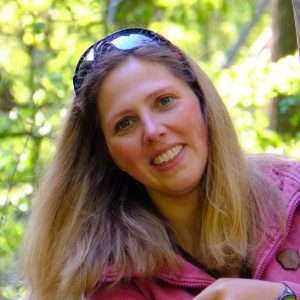
"The aim is to define a position with a perspective that assumes that the "research library" must be rethought today more than ever. Concepts that should play a role in this are "anti-library", "laboratory", "data room" and "problem library"."
SLOT follows
Further information

© HAB

Dr. Stephanie Feltgen

What makes the Japanese beetle so dangerous for Europe's ecosystems?
Scientist at the Julius Kühn Institute - Institute of National and International Plant Health Affairs
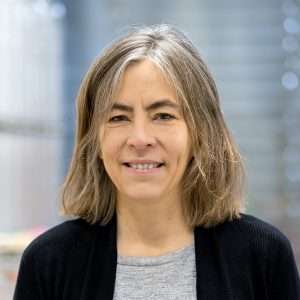
"The Japanese beetle, which is not native to our country, would infest many plants (>400 species). It feeds on flowers, leaves and fruits. Its larvae live in the soil and feed on grass roots. This combination of broad food supply and lack of native antagonists harbors the potential for mass reproduction. We are researching how its introduction and spread can be prevented."
SLOT follows
Further information

private

Martin Gestwa

Why do we need the flight test?
Head of Department at the German Aerospace Center (DLR) Facility Flight Experiments
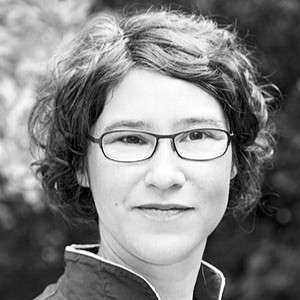
"Flight tests are mandatory for the development or proof of airworthiness to the certification authorities of an aircraft. The flight test proves whether a system functions under real conditions. Flight tests are also carried out to obtain data for the development of simulators or to validate simulation results in reality."
SLOT follows
Further information

private

Prof. Dr. Gerhard Glatzel

What kind of future would you like to see?
Professorship for Construction and Materials/ Braunschweig University of Art
"To find answers to this and other questions, we are developing one of six citizen science labs as part of the EU-funded “SPOON” project in Braunschweig, in collaboration with 15 other EU partners. The project aims to help citizens find ways to minimise food waste in the long term. We see this as a way to strengthen our democracy through participation and empowerment."
SLOT follows
Further information

© Hannah Jung, HBK BS

Prof. Dr. Elena Korowin

How does cultural transfer shape artistic forms of expression?
Professor at the Institute for Art Studies at the Braunschweig University of Art
"Cultural transfer refers to the reciprocal transfer of motifs, techniques and ideas between cultural areas. In art studies, it enables the analysis of transformation processes, appropriation and reinterpretation. Artistic works are thus created in the field of tension between exchange, power relations and identity formation and shape visual traditions in the long term."
SLOT follows
Further information

Natalia Sakhnova

Dr. Hannes Müller-Thomy

Why exactly does science need me?
Team leader at the Leichtweiß Institute for Hydraulic Engineering at TU Braunschweig | Young BWG
"Many challenges in science are very time-consuming and can only be solved by involving citizens ("citizen scientists"). This can be done in many ways: by photographing certain events, evaluating brain scans, digitizing archived data or actively taking samples. You can find out what projects there are and what you can gain from them here."
SLOT follows
Further information

private

Dr. Christian Heitzmann

Why do we keep handwritten notes?
Head of the Department of Manuscripts and Special Collections at the Herzog August Library in Wolfenbüttel
“Libraries that specialize in old books (such as the Herzog August Library in Wolfenbüttel) often also hold medieval manuscripts. These include not only famous works like the Gospel Book of Henry the Lion and Matilda of England, but also fragments—often unremarkable remnants of disassembled medieval books. Each one has a story to tell!”
SLOT follows
Further information

private

Dr. Jonas Lamberg

How can autonomous public transport secure our mobility in the future?
Project Lead "Real-World Lab" at the joint research project "TRANSFOMPATHS"
"Autonomously operating buses could help maintain mobility in rural areas, especially in times of skilled‑worker shortages and tight public budgets. But how must this new transport system be designed so that it truly creates real added value for the Braunschweig region?"
SLOT follows
Further information

private

Prof. Dr. Rolf Nohr

Those who play learn - but perhaps not always what they think they are learning,
Professor of Media Aesthetics/ Media Culture at the Braunschweig University of Art
"Anyone who plays learns - but not every educational software is a toy. Every computer game teaches us a wide range of knowledge and models of action - but a shooter does not automatically blunt us ethically. It all boils down to the old question: Why do we play? What role does "the medium" play in gaming? And above all: What else plays a role when we play? "
SLOT follows
Further information

© Michael Grosler; www.Grosler.de

Dr. Anke Hertling

How can libraries contribute to the promotion of democracy?
Head of Department at the Leibniz Institute for Educational Media | Georg Eckert Institute
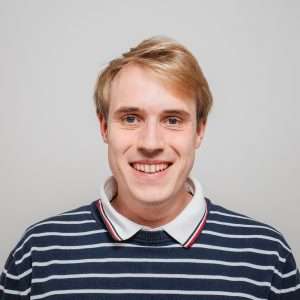
"Together we will talk about libraries, their tasks and how you perceive and use libraries. We will talk about libraries as places of encounter, the promotion of media and information literacy and their commitment to education. I invite you to join me in discussing the opening of libraries on Sundays and extremist literature in libraries. "
SLOT follows
Further information

© GEI Archive

Julius Look

How do sewer detectives track down germs?
Research Associate at the Center for Hydrosystems and Health at Ostfalia University of Applied Sciences
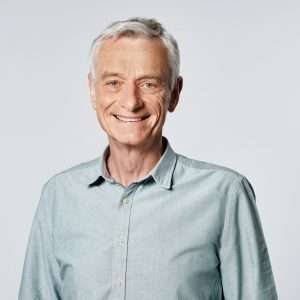
"There are bacteria everywhere in our environment and our wastewater can provide information about where there are inner-city hotspots of infection. The sewer detectives are researching a quick, inexpensive and simple method of using this knowledge. To do this, they are developing samplers, optimizing the sampling locations using AI and looking at which bacteria and resistance genes are in the samples."
SLOT follows
Further information

Paul Mandelkow

Dr. Jan Cornelius Peters

What do digitalization, climate protection and the like mean for companies in rural areas?
Deputy Director of the Thünen Institute for Innovation and Value Creation in Rural Areas
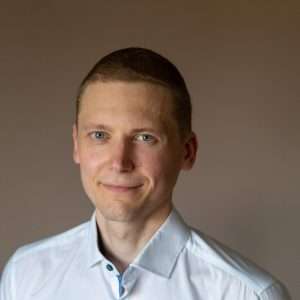
More digital, more climate-friendly, more resilient: these developments affect the economies of rural regions differently than those of cities – especially in an increasingly ageing society. Where do companies face similar challenges, and where are the differences? And which approaches can help them successfully navigate economic change?
SLOT follows
Further information

© Thünen Institute/ Heidrun Fornahl

Dr. Hendrik Reuper

How is it ensured that crop protection products are safe and effective?
Consultant at the Federal Office of Consumer Protection and Food Safety (BVL)
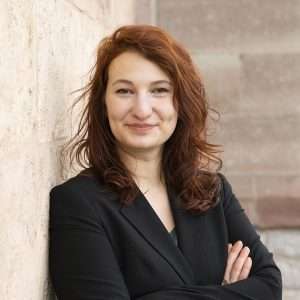
"Crops are exposed to infestation by harmful organisms and compete with weeds for resources. Agriculture uses many measures to protect plants and their products, including pesticides. When they are applied, they inevitably end up in the environment. However, this must not have any undesirable effects. That is why plant protection products require authorization."
SLOT follows
Further information

private

Dr. Marie Ritter

How do we make meetings better?
Project Coordinator conCErt, Industrial, Organizational and Social Psychology, Open Hybrid LabFactory
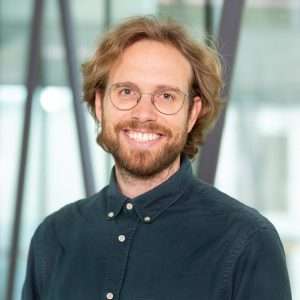
"Meetings cost time and sometimes nerves and yet they can be important resources at work. But what do we need to do about it? I would like to talk to you about meeting culture, focus and collaboration from the perspective of work and organizational psychology and introduce our new meeting lab at the Open Hybrid LabFactory, where we are researching this."
SLOT follows
Further information

© Jo Photo

Dr. Jan Schlegel

How do viruses adapt to their environment?
Junior group leader at the Helmholtz Center for Infection Research
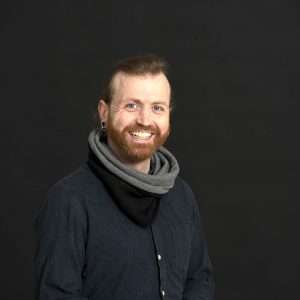
"Viruses are tiny and yet have an enormous impact on our lives. We want to understand how individual virus particles adapt to their molecular environment in order to develop novel diagnostic and therapeutic approaches. We use high-resolution microscopy and synthetic biology methods to do this."
SLOT follows
Further information

© HZI/ Verena Meier

Prof. Dr. Timo Schreiner

Good education! - Pedagogy between everyday life and research
Professor of Child and Youth Welfare at the Faculty of Social Work at Ostfalia University of Applied Sciences
"Parents, professionals and children experience education in everyday life, shaped by intuition, experience and values. Educational research and theories provide scientifically sound findings that describe, classify and critically reflect on education - even where they contradict everyday life or remain unconscious. So how does professional action succeed between everyday life and theory?"
SLOT follows
Further information

Klaus Mai

Admission is free. Registration is required.

TRAFO Hub

Sophienstraße 40
38118 Braunschweig

June 3rd 2026

Open Doors 18:00
Start: 18:30